24/7 Emergency Ceiling Water Damage Line — ColoradoFree inspection & free estimate before work starts  ·  (303) 555-0148

How Long Does It Take to Dry a Ceiling After Water Damage?

Most ceilings in Colorado dry in 3–5 days with professional equipment — then the rebuild adds 1–3 days. The clock starts when the water stops, not when you notice the stain.

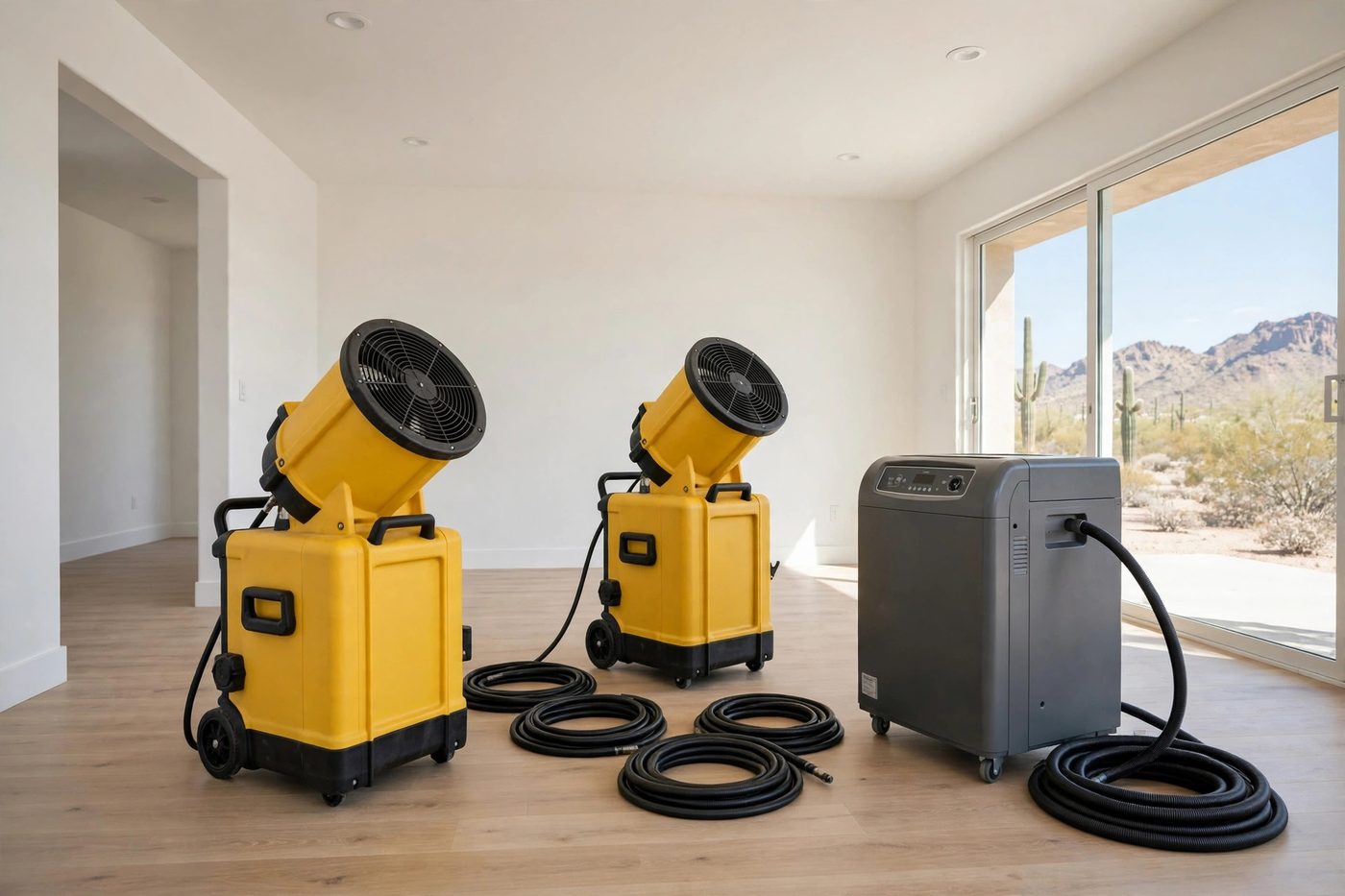
Professional drying equipment — air movers and dehumidifier drying a water-damaged ceiling in a Colorado home
Structural drying with air movers and dehumidifiers — verified by moisture readings, not by guessing.

The short answer

3–5 days for structural drying with air movers and dehumidifiers, verified by daily moisture readings. 1–3 more days for the rebuild — new drywall, texture, prime and paint. A typical one-room ceiling job takes 4–8 days from first call to finished ceiling. Mold can start in as little as 24–48 hours, so the first day matters most.

The drying timeline, day by day

StageWhat happensTypical time
Day 0Stop the water, call for help, move furniture and valuables out of the waySame day
Day 0–1Free inspection: find the source, map the moisture, open the ceiling if it is holding waterFirst visit
Days 1–5Air movers and dehumidifiers dry the cavity, insulation and framing — daily moisture readings until the structure reaches dry standard3–5 days
Days 5–8Rebuild: new drywall, taped seams, texture matched, stain-blocking primer, paint blended across the panel1–3 days

What makes drying take longer

Wet insulation holds water like a sponge and usually has to come out. Plaster ceilings dry slower than drywall. Hidden water trapped behind joists or above the stain takes longer to find and dry. Cold, damp weather slows evaporation. And the biggest delay of all: waiting — every day a wet ceiling sits, the job gets bigger.

Can you speed it up?

Household fans alone will not dry a ceiling cavity — the air has to move through the wet assembly, and the humidity has to be pulled out with a dehumidifier. Do not paint or seal a ceiling before moisture readings confirm it is dry: paint traps the moisture, the stain bleeds back, and mold grows behind the paint. And do not switch the drying equipment off early — the last day of drying is what stops the stain coming back.

Free inspection, free written estimate. Every ceiling is different — the only way to know your timeline and your scope is an inspection with moisture mapping. Request your free inspection →

Frequently asked questions

By moisture meter readings compared against a dry standard — not by touch or by look. A ceiling can feel dry on the surface while the cavity behind it is still wet. We take readings every day until the structure is verified dry, and we only rebuild after that.
Usually yes. The equipment is loud — air movers run day and night — but the room is safe to live around once the water source is stopped and any sagging section is secured. Keep the drying room clear so air can circulate.
Then something is still feeding it: a leak that was not fully stopped, wet insulation that was left in place, or water trapped behind joists. It needs a re-check with moisture mapping — not another week of waiting.

More: How free estimates work · Emergency ceiling leak repair · Ceiling water damage repair in Denver

Ceiling leaking right now? Don’t wait — water spreads fast.

Mold can start in 24–48 hours and a sagging ceiling can come down without warning. Call now and describe what you see — we’ll book your free inspection.

(303) 555-0148
📞 Call Now — (303) 555-0148